Categories
Work

SDES Template Engine

  • Type: Class
  • Language: PHP

Purpose

In our division, there are various entities we consider customers. Most of those customers cede support of their web environment to us, but some retain the right to have a full-time “developer” on staff to make edits. Unfortunately, there is crossover between sites we’ve developed and sites that these developers feel belong to them. This has been a problem for years; only now am I taking action programmatically. I got clearance to develop a simple PHP class/framework/engine to structure the basic data each of our sites require (title, subtitle, navigation, social networks, etc.).

Method

I wrote everything by hand, top to bottom, imagining our basic PHP sites as objects. These objects needed many small pieces, like the title, the associated department, and the contact phone number, but I considered larger items, like database connections, the page requested, and the layout/design of the site. I wrapped most of this data in a straightforward class that accepted changes to its properties exclusively via setter methods, exposed data exclusively via getter methods, and farmed settings out to a config.ini file.

Highlights

As every site was converted to this simple engine, it gave me the ability to wrap simple HTML blocks into helper methods. Now, every site has a standard way to print contact information, social networking URIs and buttons, footer information, and so on. It has been an easy bridge between design and development to save time and preserve a standard.

It also gave me a chance to develop a database class that preserves a single database connection via the singleton method (only allowing a single instance of the database object).

Takeaway

It feels like I’m creeping a little too far into custom-PHP land; I know we should be using something like Symphony or CodeIgniter and a templating framework like Twig or Smarty, but for this environment, where access to production is treated like a right and not something to be protected and given out sparingly, I needed something a bit more customized and esoteric. But rest assured this custom implementation will be trashed and swapped for some open-source framework as soon as our environment makes sense.

Categories
Work

My SDES

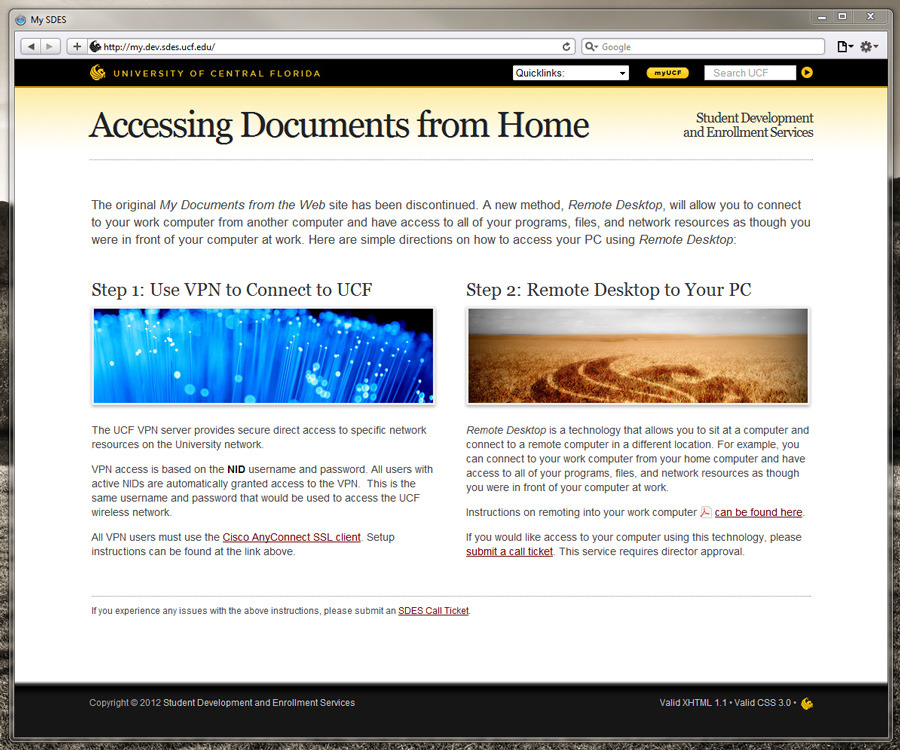
One of the last sites to move to our web cluster, the “My SDES” site was a simple (and horrible) application that used Integrated Authentication, LDAP, and WebDAV to allow users to use a web interface to access their appropriate folders on our file server. Even if you ignore the dangers in that statement, WebDAV has basically been phased out for WAN communication, so we had to come up with another solution. Rather than allow the application to continue to be a security hole, I convinced management that based on IIS logs, very, very few people utilized the site and replacing it with a site explaining the benefits of VPN and Remote Desktop was preferable.

I was given free reign to design the site and after deploying my template base, I tried to keep the elements as simple, inviting, and informative as possible while keeping it to a single screen.

Categories
Work

Dee En Es

Me: so, funny story; I just got sick of the name orderofpegasus.sdes. drafted an email to your team for a DNS request for order.sdes instead. on a hunch, I pinged it first and it resolved. realized I had asked for it like a year ago and forgot about it. So thank you, insightful me of yesteryear

Matt: as you can see, we clean up DNS requests regularly

Categories
Work

LINK

  • Type: Website
  • Language: PHP
  • Framework: None
  • Authentication: Integrated
  • Data Source: SQL Database

Purpose

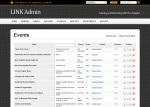
This project was largely self-initiated. As with many problems at UCF, my task arose from a former student assistant’s bad and incomplete code. Rather than tip-toe around it and poke and prod as necessary, I decided to take up a sprint to rewrite the database front-end and accompanying student-facing site.

Method

As we had yet to adopt a PHP framework, the CRUD for each table was developed by hand, with a few helper functions that matched httpPost values with SQL table columns for create and edit pushes.

Highlights

For the public event submission form, I was able to discover an API to UCF’s campus map, consume it as JSON, parse out the list of buildings, and make that a required choice for the event. Once the event was approved and posted, public users could then discover the location of the event through a link to the campus map.

As each event was displayable as both a master event and a single session of a master event, I was able to integrate each with a “Post to Facebook” and “Post to Twitter” button, allowing a social layer of connection to the program’s social networking presences.

Finally, we developed some icons that allowed event categories to be associated with a color, allowing users to quickly determine differences.

Takeaway

Sometimes, throwing away the remnants of a bad idea and starting fresh is the best way to go, despite the time commitment. The resulting application has survived with no changes for years now–a testament to the customer’s satisfaction with the user experience.

Categories
Work

How I Roll At Work

SUBJECT
GAP RSVP from Why is this website still on the internet 

BODY
Name: Why is this website still on the internet
Title: it hasn’t been updated in like a year
Dept: please someone let IT know if they can remove it
Office Phone: thank
Cell Phone: you
Email: gilbert.thudpucker@ucf.edu

Categories
Work

Foreign Key Jungle

(Taken with instagram)

Categories
Work

Ice Slide!

The sad part is that I was the only one from my team to slide =(

Categories
Work

SDES IT: Training Application

  • Type: Website
  • Language: C#
  • Framework: MVC 2
  • Authentication: Integrated
  • Data Source: SQL Database

Purpose

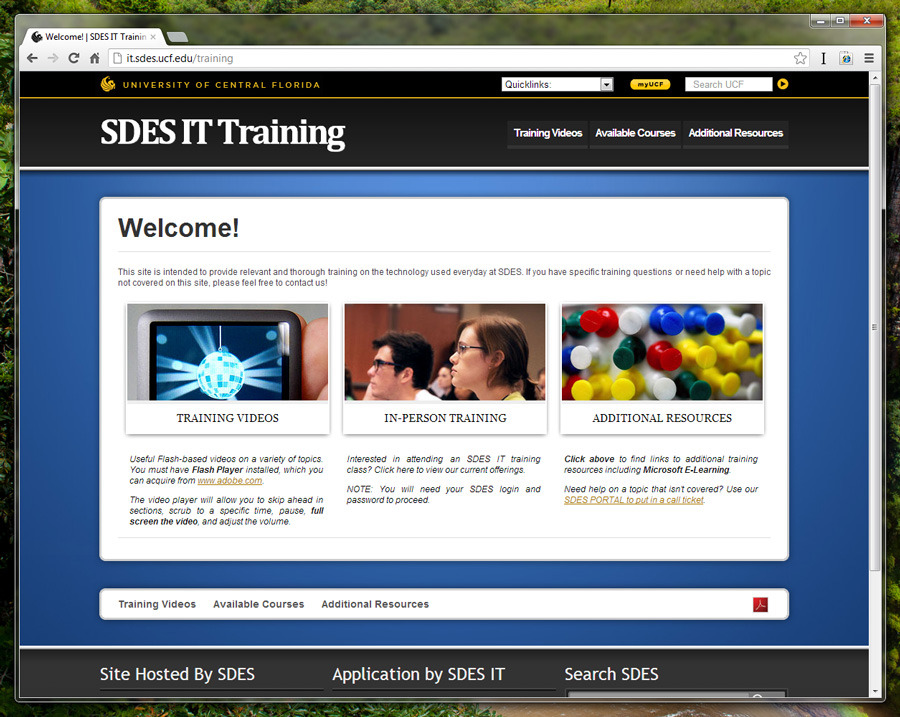
Our training situation at SDES IT developed into a full-time training position. Once hired, this trainer requested a way to have users discover classes, sign up for said classes, and be sent reminders for said classes.

Method

For this application, I wanted to dip my toes in .NET MVC (then at version 2). The resulting app absorbed the existing PHP site (including videos, text copies, and links) and introduced a Windows-Auth-protected section that allowed users to sign up for available classes and fill out a profile (which would be pulled up on subsequent visits). After each submission, an iCal-formatted ICS file would be dispatched to their email address, allowing them to track their own class signups.

Highlights

The delineation of access levels is so painless in MVC, as each controller can easily be filtered to a certain Active Directory user or role/group. This allowed the app to cover public users, domain users, and administrators in one project with ease. Also, building an ICS file from scratch was exciting and highly effective.

Takeaway

While we were not quite prepared for the volatility the trainer position would exhibit over the next few years, the application ran into very few problems during its tenure as a class-signup solution. It is currently on hold for a redesign to match future needs.

Categories
Work

FormProcessor Class (PHP)

  • Type: Class
  • Language: PHP
  • Framework: None

Purpose

As I tackled more and more UCF sites during my tenure, I discovered that each individual “webmaster” had developed their own server-side implementation for sending emails of basic web form data. Rather than continue to work around their own code, I developed a PHP implementation that generically wrapped httpPost data into a simple email.

Method

The first implementation of FormProcessor was a simple PHP class that had public properties (e.g., to, cc, and subject), some private methods to check for dangerous code (like email header injection), and a public method to send the email. Over time, the public methods have become private in favor of mutator methods, new helper methods have been added (including file attachments, filestream attachments, a development mode, etc.), and any specific stored information has been migrated to a config.ini file.

Highlights of Implementation

As complicated as it was to implement an email attachment method without a standard library, it is exceedingly satisfying to use that method in seconds now. Also, finally working with PHP in an object-oriented manner is a breath of fresh air.

Takeaway

At this point, I kind of wish I’d known about the PEAR Mail package, but I’m fairly proud of the implementation; it’s made it effortless for our web content updaters and designers to implement fairly powerful email operations without needing to know much (if anything) about PHP. It continues to make PHP development and deployment speedy and predictable, and it has been integrated into the Template Engine I built to standardize our layouts.

Categories
Work

UCF Creed Site Design

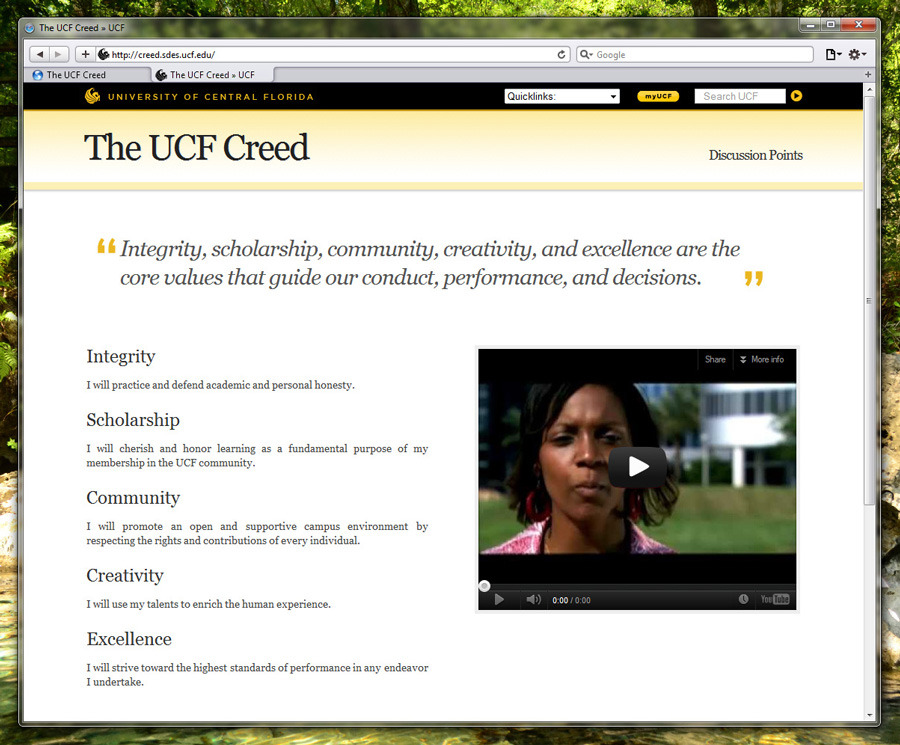
In my quest to make everything I can at UCF better and nicer, I recently decided to tackle the CUF Creed site. The site only displays the UCF Creed (a small collection of statements) and a page of discussion points for professors. I attempted to adapt the styling to the normal UCF template, streamline the display of the tenets, and write some custom CSS to style the blockquote of the main Creed statement. I found an older, seemingly-professionally-produced video about the Creed, uploaded it to our SDES IT YouTube channel, and embedded it opposite the tenets.

This site was developed proactively in Notepad++.